PROJECT · [TODO: start year] – present
Weather Satellites with SDR
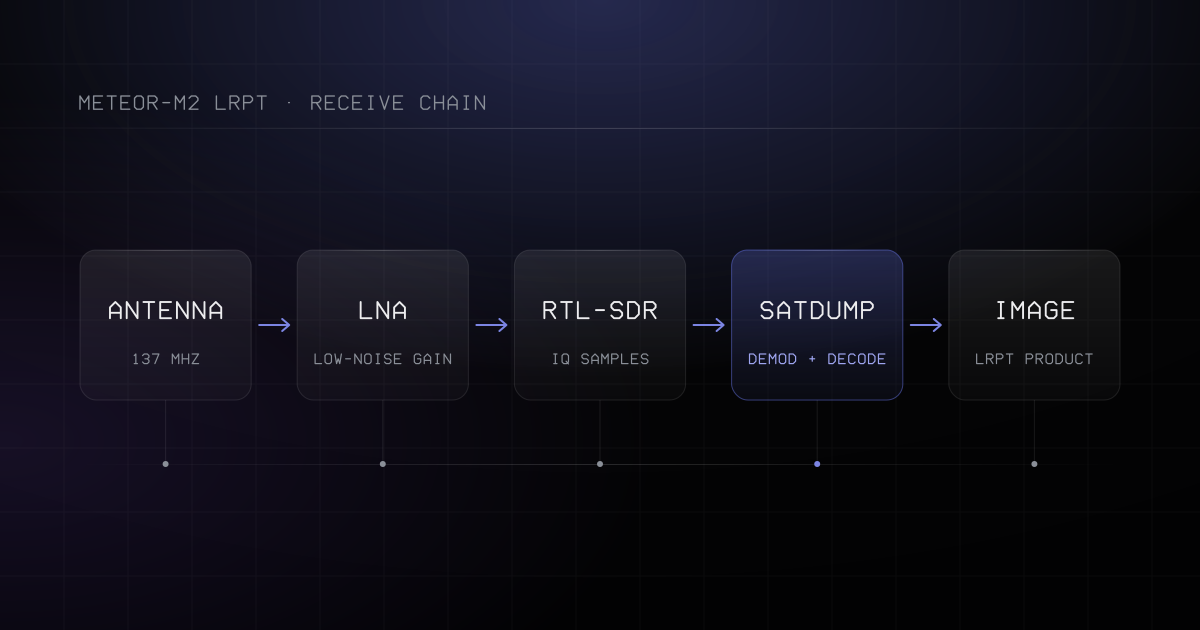
Receiving and decoding LRPT images from the Meteor-M2-3 and M2-4 weather satellites with an RTL-SDR, SDR++ and SatDump.
- Role
- Solo project
- Period
- [TODO: start year] – present
- Status
- Ongoing
- Tags
- #sdr#rf#satellites
The problem
The Russian Meteor-M2-3 and M2-4 weather satellites broadcast LRPT, a digital image downlink, near 137 MHz (137.1 and 137.9 MHz). Anyone with a cheap receiver can pick it up during a pass, but only if the recording keeps the signal intact and the pass is predicted accurately.
What I did
I receive passes with an RTL-SDR, watch and record them in SDR++, and decode the recordings with SatDump. My first attempt failed because I recorded demodulated audio instead of raw IQ; I wrote up why. The same setup also covers other amateur-satellite work: HADES SSTV and ISS APRS and SSTV. [TODO: antenna type, LNA and where you receive from, described generally]
Results
[TODO: number of successful passes or a best decoded image, with a gallery entry]
What I learned
A digital downlink is unforgiving: the recording format matters as much as the antenna, and fresh orbital elements make the difference between catching a pass and missing it. [TODO: one more lesson]
Related notes
1 min read
Why my first Meteor-M2 recording couldn't be decoded
I recorded a Meteor-M2-3 pass as FM-demodulated audio instead of raw IQ. Here's why LRPT needs baseband, and how I record now.